

US and China Agree to Reopen Military Communication Channels After Trump–Xi Talks

- আপডেট : রবিবার, ২ নভেম্বর, ২০২৫
- ৪২ বার দেখা হয়েছে
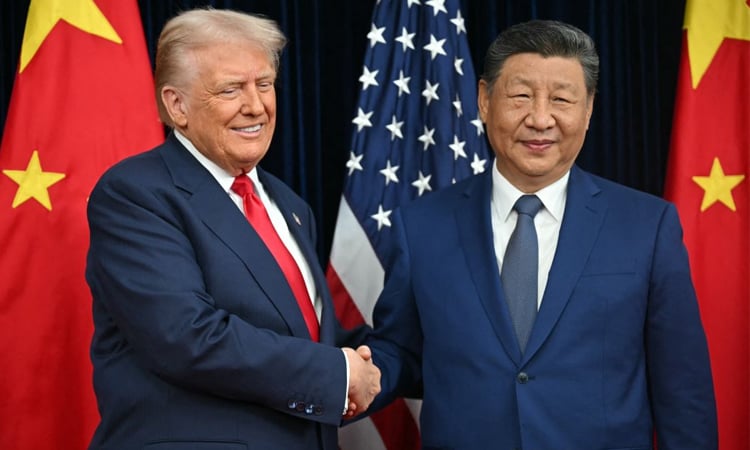
International Desk: The United States and China have agreed to revive military-to-military communication channels aimed at preventing conflict and reducing tensions, following discussions between US Defense Secretary Pete Hegseth and Chinese Defense Minister Dong Jun on the sidelines of a regional summit in Malaysia.
The meeting between Hegseth and Dong took place a day after US President Donald Trump and Chinese President Xi Jinping held talks in South Korea. The renewed effort marks a significant step toward restoring defense dialogue between the two major powers after years of strained military communication.
In a post on X (formerly Twitter), Defense Secretary Hegseth said, “I just spoke to President Trump, and we agree — the relationship between the United States and China has never been better.” He added that he had also spoken again with Defense Minister Dong following their in-person meeting.
“The Admiral and I agree that peace, stability, and good relations are the best path for our two great and strong countries,” Hegseth wrote, describing the approach as one of “strength, mutual respect, and positive relations.”
Hegseth further stated that both sides agreed to establish direct communication channels between their militaries “to deconflict and deescalate any problems that arise.” He noted that such channels had existed in the past but had often fallen into disuse. “We have more meetings on that coming soon,” he said, without providing further details.
There was no immediate official comment from Beijing on the US statement.
However, according to a readout released by China’s Ministry of National Defense, Minister Dong Jun told Hegseth that the two countries should “strengthen policy-level dialogue to enhance trust and dispel uncertainty,” and work toward building a military relationship “characterized by equality, respect, peaceful coexistence, and stable positive momentum.”
Earlier this year, Hegseth had warned that China was “credibly preparing” to use military force to alter the balance of power in Asia — remarks that prompted a sharp response from Beijing.
The agreement to restore communication mechanisms comes amid ongoing tensions between the two countries over several regional flashpoints. China continues to assert extensive territorial claims over the South China Sea, which overlap with those of neighboring countries allied with Washington.
Additionally, Taiwan remains a sensitive issue in US-China relations. Beijing regards the island as part of its territory and opposes any formal interactions between Taipei and foreign governments. Tensions sharply escalated in 2022 after then–US House Speaker Nancy Pelosi’s visit to Taiwan, which led China to launch large-scale military drills surrounding the island.
Diplomatic observers note that the latest move to reopen defense dialogue reflects a mutual recognition of the need to manage strategic competition responsibly and avoid unintended escalation. While concrete outcomes are yet to be seen, the renewed talks indicate a cautious thaw in defense-level communication between Washington and Beijing.










প্রধান সম্পাদক: রাশিদুল হাসান বুলবুল, নির্বাহী সম্পাদক: নূরুল মোমেন খান চৌধুরী (রুমী),
দেশ মিডিয়া ওয়ানবিডি লিঃ এর পক্ষে- মোছাঃ হুসনা খাতুন কর্তৃক : ক-৪২/ (২য় তলা), বারিধারা, ঢাকা থেকে প্রকাশিত এবং মেসার্স ঝরনা প্রিন্টার্স, ১৭০ ফকিরাপুল, মতিঝিল, ঢাকা থেকে মুদ্রিত:
ফোন: ৮৪১৮১৪৪, মোবাইল: ০১৭৫৯৫১৬৭১৬, ০১৭৩৬৬১১৮১১,
E-mail: deshmedia1@gmail.com , Web: deshmediabd.com