

India Clinches First Women’s World Cup Title, Marking Historic Milestone for Nation’s Cricket

- আপডেট : সোমবার, ৩ নভেম্বর, ২০২৫
- ৩৯ বার দেখা হয়েছে
Sports Desk :
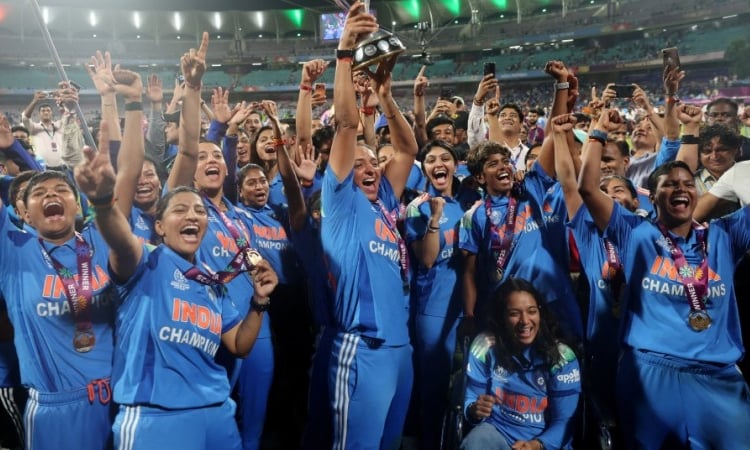
India achieved a historic milestone in world cricket on Sunday as the national women’s team won their maiden ICC Women’s World Cup title, defeating South Africa by 52 runs at a packed DY Patil Stadium in Mumbai. The victory marks the first time India’s women have lifted the trophy, adding to the country’s four men’s World Cup triumphs since 1983.
India’s comprehensive performance in the final showcased both their resilience and tactical depth. Batting first, the hosts set a formidable total of 298 for 7, led by opener Shafali Verma’s explosive 87 and Deepti Sharma’s composed 58 off 58 balls. South Africa, in response, fought valiantly through captain Laura Wolvaardt’s century (101) but succumbed to sustained pressure, collapsing to 246 all out in 45.3 overs. Sharma capped her all-round performance with five wickets for 39 runs, earning the Player of the Match award.
The win sparked widespread celebrations across India, with jubilant fans gathering in major cities, waving flags, and lighting fireworks. The triumph was hailed as a transformative moment for women’s sports in the country, potentially inspiring a new generation of athletes to pursue cricket at the highest level.
Cricket icons and national leaders lauded the achievement. Batting legend Sachin Tendulkar praised the victory as a defining chapter in India’s sporting history, recalling parallels with the men’s team’s first World Cup win in 1983. “That victory inspired a generation to dream big. Today, our women’s team has done something equally special,” Tendulkar wrote on social media, adding that the players had motivated countless young girls to believe they too could lift the trophy one day.
Former men’s captain Virat Kohli described the win as “an inspiration for generations to come,” applauding the team’s fearless approach and belief throughout the tournament. Prime Minister Narendra Modi congratulated the squad, noting that the “historic win will motivate future champions to take up sports.”
The significance of the moment was underscored by the presence of members from India’s first women’s World Cup squad in 1978, including then-captain Diana Edulji, who witnessed the team’s triumph from the stands. For many, the victory symbolized the culmination of decades of perseverance and progress in women’s cricket—a sport that once struggled for recognition and support in a cricket-obsessed nation dominated by men’s achievements.
Captain Harmanpreet Kaur, reflecting on the journey, credited the team’s mental strength and focus for their success. “There were ups and downs, but we always had self-belief,” she told reporters. “We weren’t distracted by results or comparisons. Our goal was clear from day one—to win the World Cup for India.”
India’s campaign had not been without challenges. After a slow start in the group stage, including three consecutive losses, the team staged a remarkable turnaround to qualify for the knockout rounds. Their resilience under pressure and consistent performances from both seasoned and young players ultimately defined their path to glory.
With this victory, Harmanpreet Kaur joins the elite ranks of Indian captains who have lifted World Cup titles—Kapil Dev (1983), MS Dhoni (2007, 2011), and Rohit Sharma (2023). The win is expected to elevate the status of women’s cricket in India, potentially driving greater investment, infrastructure development, and grassroots participation across the country.
As the team lifted the trophy to the roar of over 45,000 fans shortly after midnight, the moment was widely seen as a turning point—not only for Indian cricket but also for women’s sport in general. The scenes of jubilation, in stark contrast to the muted acknowledgment of India’s runner-up finish in 2005, underscored how far the women’s game has come.
For India, the 2025 World Cup victory stands as both a sporting triumph and a cultural landmark—an emphatic statement that women’s cricket has arrived on the global stage.









প্রধান সম্পাদক: রাশিদুল হাসান বুলবুল, নির্বাহী সম্পাদক: নূরুল মোমেন খান চৌধুরী (রুমী),
দেশ মিডিয়া ওয়ানবিডি লিঃ এর পক্ষে- মোছাঃ হুসনা খাতুন কর্তৃক : ক-৪২/ (২য় তলা), বারিধারা, ঢাকা থেকে প্রকাশিত এবং মেসার্স ঝরনা প্রিন্টার্স, ১৭০ ফকিরাপুল, মতিঝিল, ঢাকা থেকে মুদ্রিত:
ফোন: ৮৪১৮১৪৪, মোবাইল: ০১৭৫৯৫১৬৭১৬, ০১৭৩৬৬১১৮১১,
E-mail: deshmedia1@gmail.com , Web: deshmediabd.com